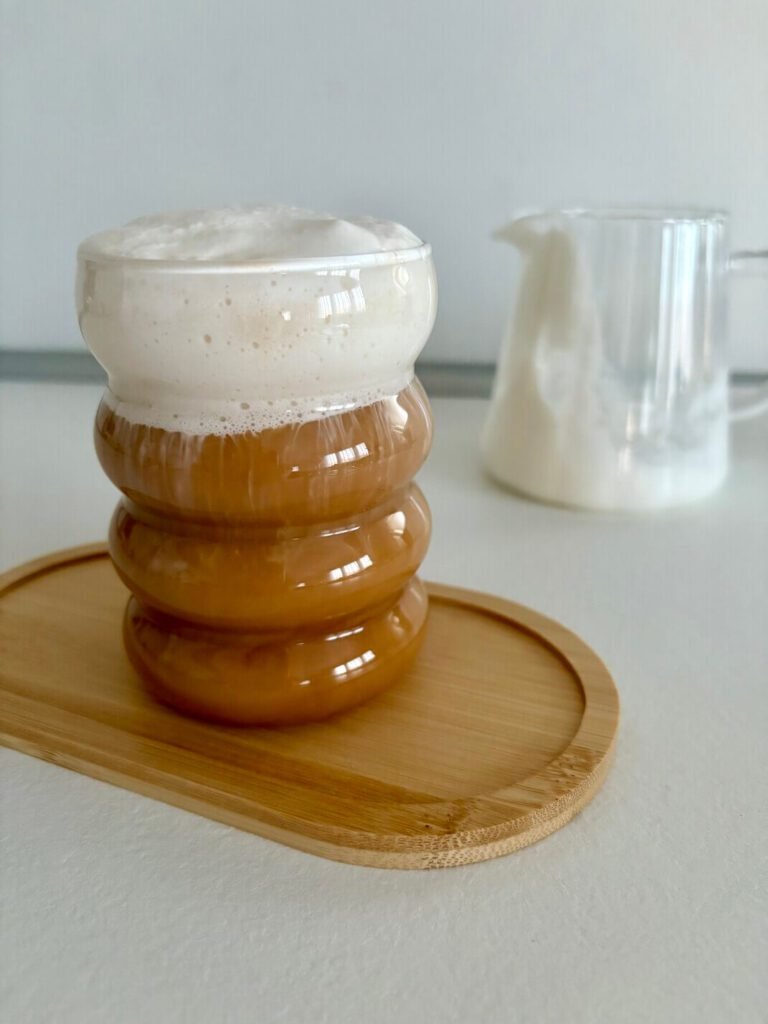
If you love cold foam but also care about getting enough protein in your day, this recipe is about to become part of your routine.
Protein cold foam gives you that thick, creamy layer on top of iced coffee, cold brew, or even matcha, while actually keeping you full.
I started making it at home when I realized how easy it is to customize the flavor, sweetness, and texture, and how much money it saves compared to buying it out every week.
The best part is that you don’t need fancy equipment or barista skills. With the right ingredients and a few simple steps, you can make café-style foam in under two minutes.
What Protein Cold Foam Actually Is
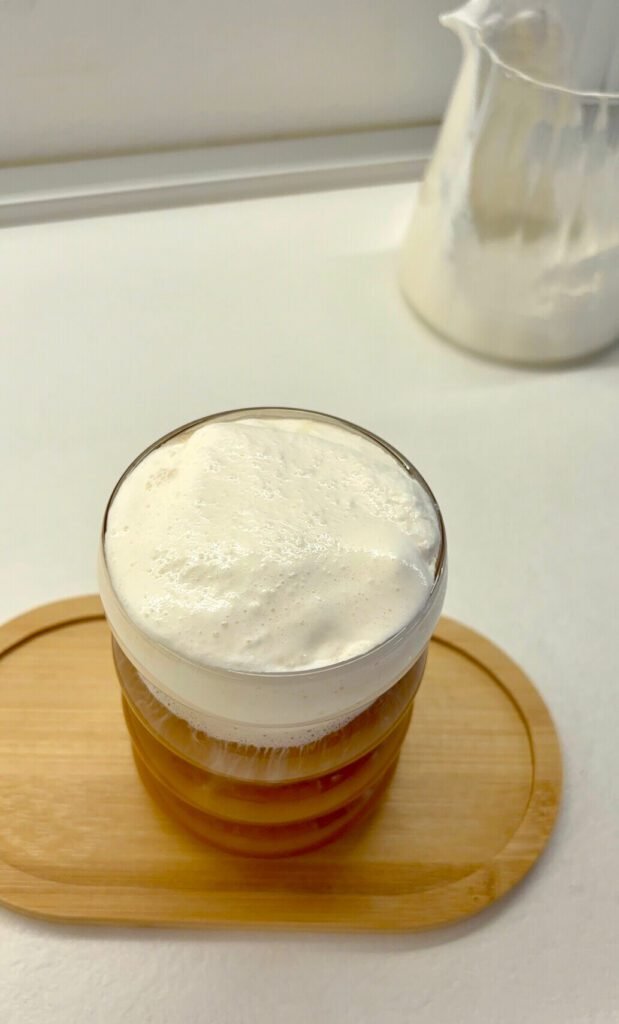
Protein cold foam is a whipped, lightly sweetened milk mixture that’s blended with protein powder until airy and pourable.
It’s similar in texture to Starbucks cold foam, but with real nutritional value.
Instead of being just cream and sugar, it contains:
- Milk or a milk alternative
- Protein powder
- A small amount of sweetener
- Optional flavoring like vanilla or caramel
The goal is a foam that sits on top of your drink, slowly mixing in as you sip.
Why Add Protein to Your Cold Foam?
Adding protein turns your coffee into something that actually holds you over.
Here’s why it works so well:
- It adds 10–20g of protein with almost no effort
- It helps prevent the blood sugar crash you can get from sweet coffee drinks
- It makes iced coffee feel more like a mini meal
- It supports muscle recovery if you train
- It keeps you full longer than regular cold foam
I especially like it on busy mornings when I don’t feel like eating right away but still want something more than caffeine.
Best Ingredients for Protein Cold Foam
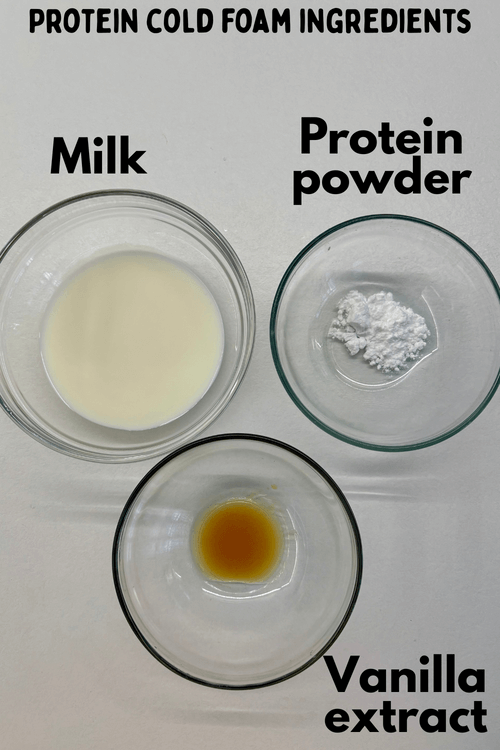
You can experiment a lot, but these choices give the best texture.
Milk Base
Use one of these:
- 2% milk (best balance of foam + creaminess)
- Whole milk (thicker foam)
- Almond milk (lighter, lower calories)
- Oat milk (slightly sweeter, softer foam)
Note: Avoid heavy cream for protein foam. It’s great for regular cold foam, but it’s too heavy and doesn’t whip well with protein powder.
Protein Powder
This matters more than people think.
Best options:
- Whey isolate – foams the best and blends smoothly
- Vanilla whey protein – easiest flavor
- Unflavored whey – if you want full control over sweetness
Note: Plant-based protein works, but the foam will be thinner and less stable.
Sweetener (optional)
You can use any of these sweeteners in your protein cold foam:
- Maple syrup
- Honey
- Simple syrup
- Sugar-free syrup
- Stevia or monk fruit
You only need a little.
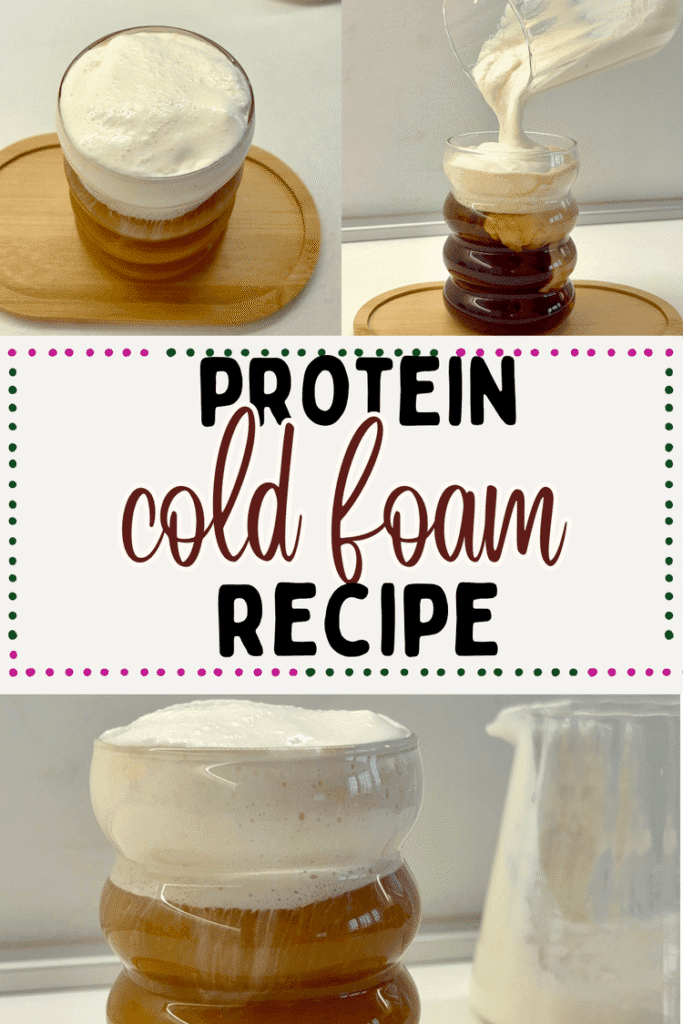
Step-by-step: how to make protein cold foam
This is the exact method I use.
Step 1: Add milk to your container
Pour ½ cup (120 ml) cold milk into a tall glass, jar, or blender cup.
Cold milk foams better than room temperature.
Step 2: Add protein powder
Add ½ to 1 scoop of protein powder.
Start with ½ scoop if you want lighter foam. Use a full scoop for thicker, more filling foam.
Step 3: Sweeten and flavor
Add:
- 1–2 teaspoons sweetener (optional)
- ¼ teaspoon vanilla extract (optional)
Note: You can skip the sweetener if your protein powder is already sweet.
Step 4: Blend or froth
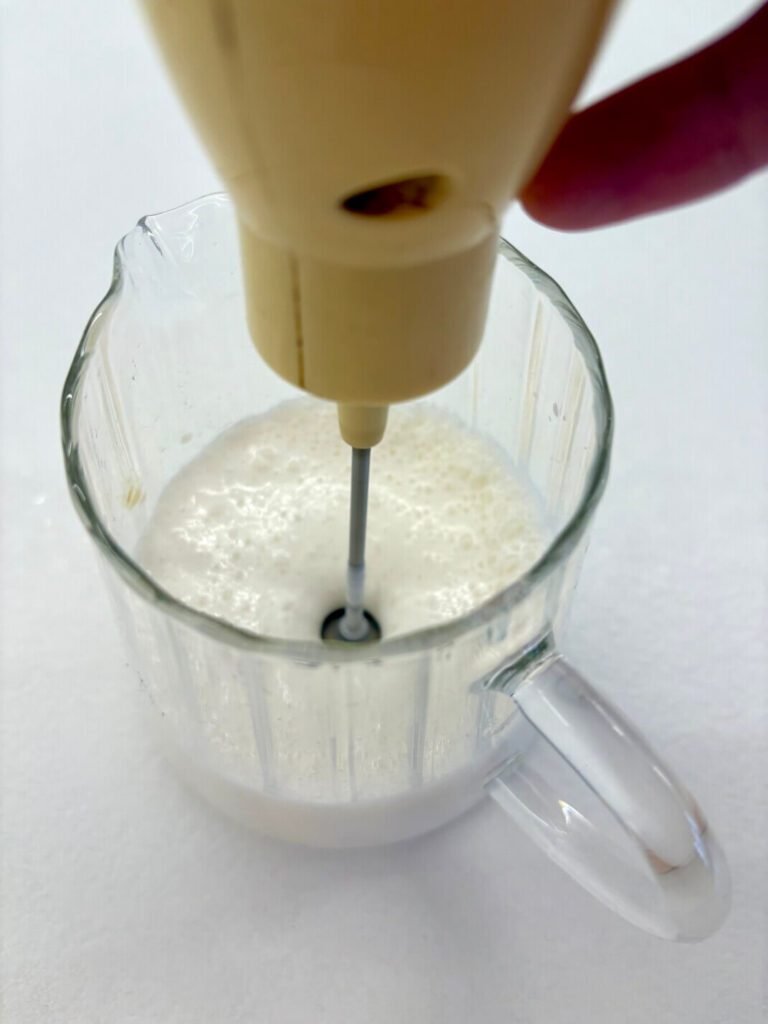
Use your frother or blender and mix for 15–30 seconds.
You’re looking for volume increase, tiny bubbles, and a soft, pourable foam.
It should be thick but still flow.
Pro tip: If it’s too thick, add 1–2 tablespoons milk and blend again.
Go here to learn how to make cold foam in four different ways.
Step 5: Prepare your coffee
Make:
- Iced coffee
- Cold brew
- Iced latte
- Iced matcha
Fill your glass with ice and coffee first.
Step 6: Spoon or pour the foam on top
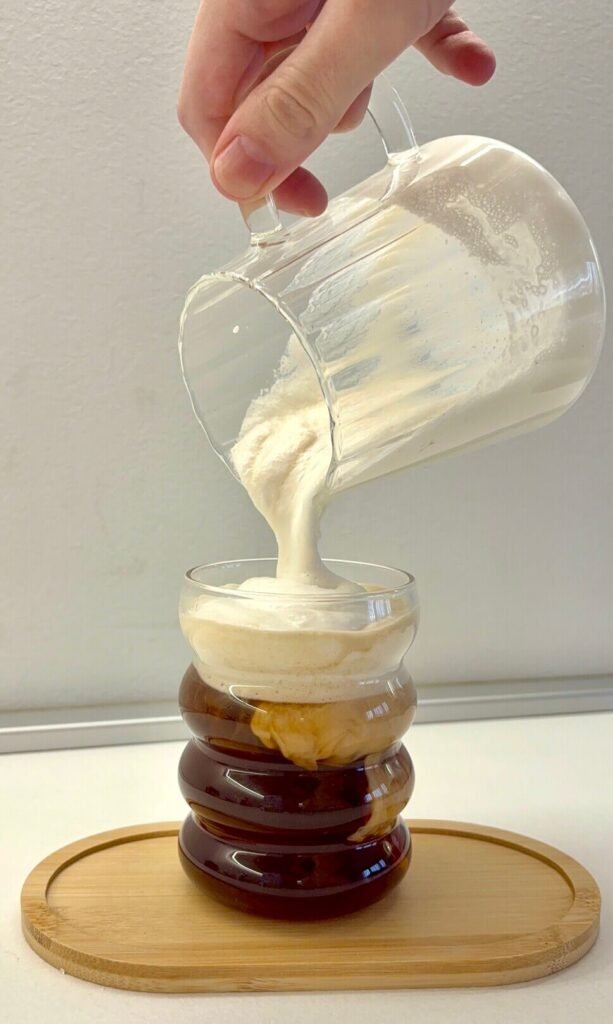
Slowly pour the protein cold foam over your drink.
It should float on top and gradually mix in as you drink.
Troubleshooting common texture problems
If your foam turns out thinner than expected, it’s usually because the protein powder ratio is too low or the milk isn’t cold enough.
Using whey isolate instead of regular whey also makes a big difference, since it blends more smoothly and traps air better. Blending or frothing for a few extra seconds can also help thicken it.
When the foam becomes too thick or almost like a paste, it usually means there’s too much protein powder or not enough liquid. Adding one or two tablespoons of milk and blending again will fix it quickly.
Grainy or sandy texture is one of the most common issues. This happens when the protein powder doesn’t dissolve fully or when the powder quality is low.
Whey isolate tends to be the smoothest option. Blending longer and using very cold milk also helps reduce clumps and improve the final texture.
If the foam collapses quickly, that’s normal to some extent, but it can happen faster with plant-based protein powders or low-fat milks. Using 2% or whole milk will make the foam more stable and last longer on top of your drink.
Protein Cold Foam vs. Regular Cold Foam
| Feature | Protein Cold Foam | Regular Cold Foam |
|---|---|---|
| Protein | High | Very low |
| Calories | Moderate | Often high |
| Fullness | Keeps you full | Doesn’t |
| Texture | Light & creamy | Creamy |
| Purpose | Coffee + nutrition | Coffee topping only |
Protein Foam Flavor Ideas to Try
Once you get the basic protein cold foam right, it’s easy to change the flavor depending on your mood or what kind of coffee you’re making.
For a simple vanilla latte vibe, use vanilla protein powder and add a small splash of vanilla extract. It tastes clean, lightly sweet, and works with almost any iced coffee or cold brew.
If you like sweeter, dessert-style drinks, caramel protein foam is a great option. Vanilla protein powder with a teaspoon of caramel syrup creates that coffee-shop flavor without needing heavy cream. It’s especially good on cold brew.
Chocolate lovers can go for chocolate protein powder or add a little cocoa powder to vanilla protein. The foam ends up tasting like melted chocolate milk and pairs really well with iced espresso.
For something cozy, try a cinnamon version. Vanilla protein powder with a small pinch of cinnamon gives a “cinnamon roll” feel, especially on iced lattes.
Pro tip: If you prefer to keep sugar low, you can use unsweetened almond milk, unflavored protein powder, and a bit of sugar-free vanilla syrup. It still foams well and keeps the calories down.
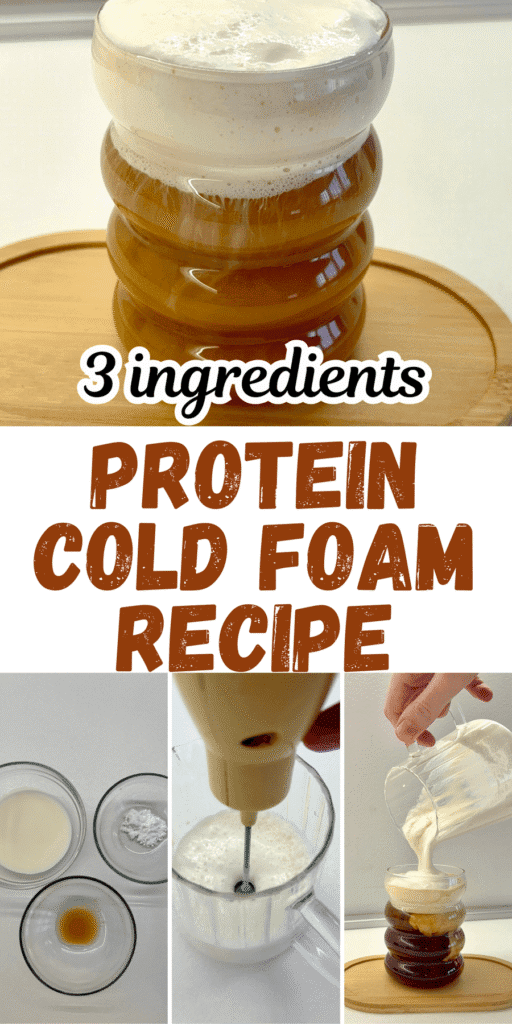
How Much Protein Is in Protein Cold Foam?
It depends on your powder, but usually:
- ½ scoop = 10–12g protein
- 1 scoop = 20–25g protein
That’s more than most protein bars.
For more protein coffee ideas, check out 18 Easy Protein Coffee Recipes to Upgrade Your Daily Coffee.
Can You Make Protein Cold Foam Ahead of Time?
Yes, but it’s best fresh.
If needed:
- Store in the fridge up to 24 hours
- Shake or re-froth before using
Foam slowly collapses, so fresh is always better.
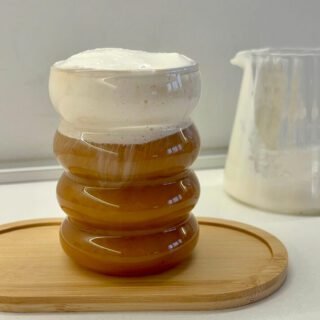
Protein Cold Foam
Ingredients
- ½ cup cold milk 2%, whole, almond, or oat
- ½–1 scoop vanilla or unflavored protein powder
- 1-2 tsp sweetener optional
- ¼ tsp vanilla extract
Instructions
- Pour cold milk into a tall glass, jar, or blender cup.
- Add protein powder.
- Add sweetener and vanilla extract if using.
- Froth or blend for 15–30 seconds until thick and foamy.
- Prepare your iced coffee or cold brew in a separate glass.
- Slowly pour or spoon the protein cold foam over the drink.
- Serve immediately.
Video
Notes
- Whey isolate gives the smoothest foam.
- Use very cold milk for best texture.
- If foam is too thick, add 1–2 tablespoons milk and re-blend.
- Best consumed immediately, but can be stored 24 hours in the fridge.
- Works great on iced coffee, cold brew, and iced matcha.
Check out more cold foam recipes:
- Salted Caramel Cold Foam Recipe
- Chocolate Cold Foam Recipe
- Vanilla Sweet Cream Cold Foam Recipe
- Matcha Cold Foam Recipe


Marina is the writer behind CozyCornerCharm. She grew up on Turkish coffee, later discovering specialty brewing through her first V60, which inspired her ongoing coffee journey. She has written for Craft Coffee Spot, Home Grounds, and Barista HQ and now shares her experience here on her own coffee corner.
[…] Pro tip: this protein coffee works great with protein cold foam. […]