If you’ve been seeing mango drinks on the Starbucks spring menu and want that same flavor at home, this mango syrup is the part that makes everything work.
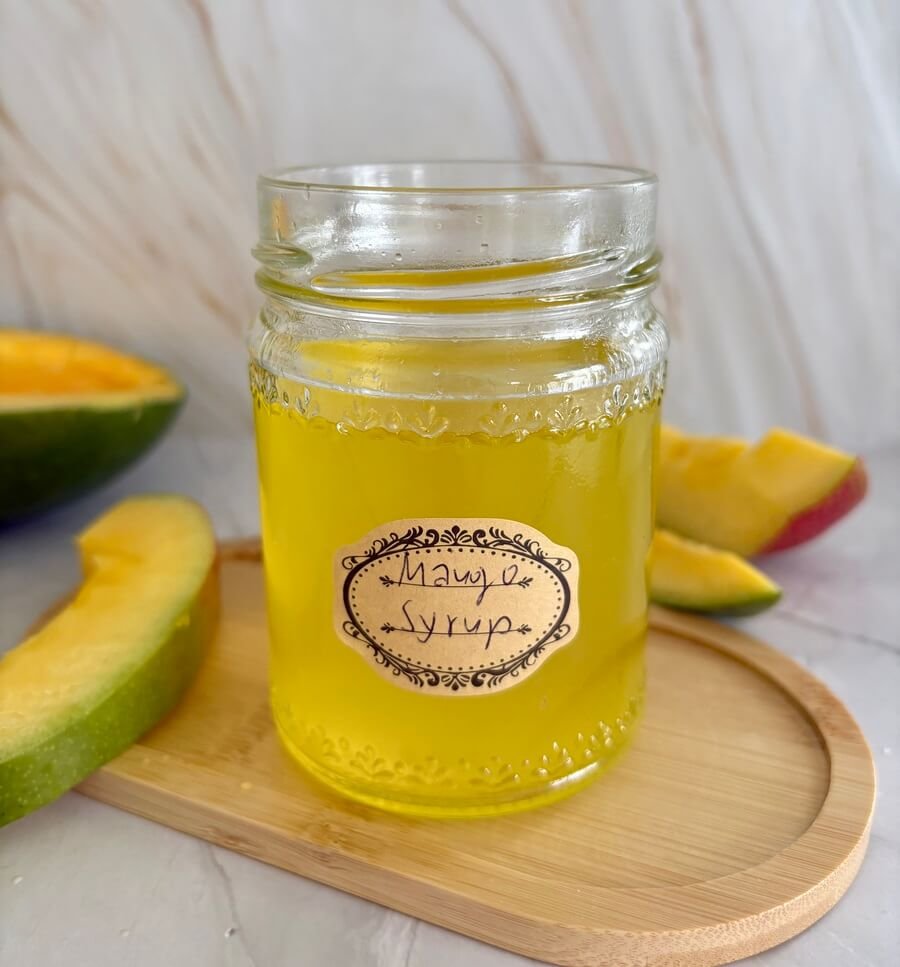
It’s sweet, fruity, and actually tastes like real mango instead of something artificial. I tested this specifically to use in mango cream cold foam and iced mango drinks, and this version ended up being the one that keeps giving consistent results.
The best part is that you don’t need a blender or anything complicated. It’s a simple stovetop syrup that comes together fast and keeps well in the fridge.
Once you have it, making iced mango cream matcha or mango chai becomes really easy, because the flavor is already done.
Mango Syrup Ingredients
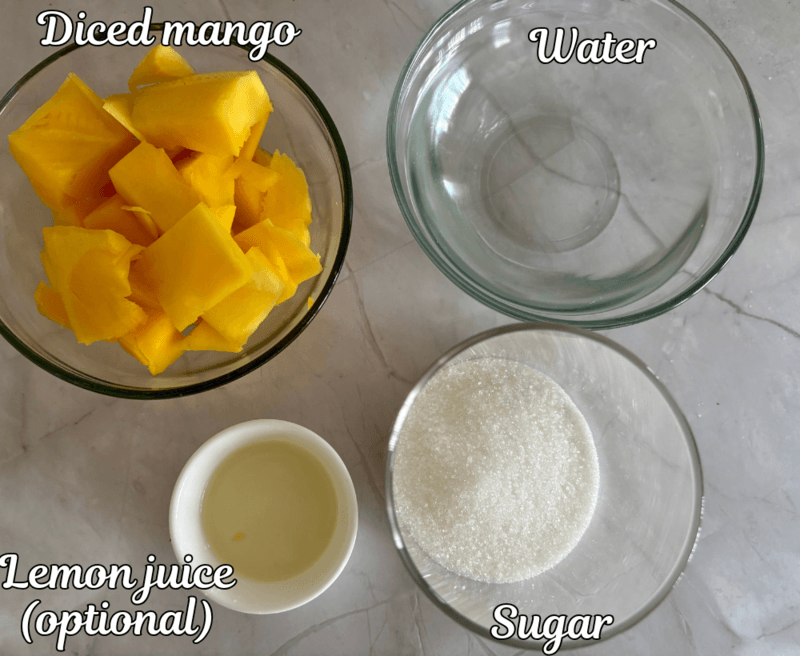
- 1 cup mango, finely diced
- 1 cup water
- ¾ cup sugar
Optional:
- 1 teaspoon lemon juice (for brightness)
Start with ripe mangoes. This step matters more than anything else.
If the mango isn’t sweet and fragrant on its own, the syrup will fall flat no matter how much sugar you add.
I usually go for honey (Ataulfo) mangoes because they’re softer and naturally sweeter, but regular mangoes work too. You want something that smells fruity and gives slightly when pressed.
Peel the mango and cut it into small chunks. Measure out about one cup of mango pieces for a standard batch.
Smaller pieces cook faster and break down more easily, which helps the syrup turn smooth without needing extra work later.
Pro tip: If you’re using frozen mango, let it thaw first and drain off excess liquid so your syrup doesn’t end up too thin.
Combine the Ingredients in a Saucepan
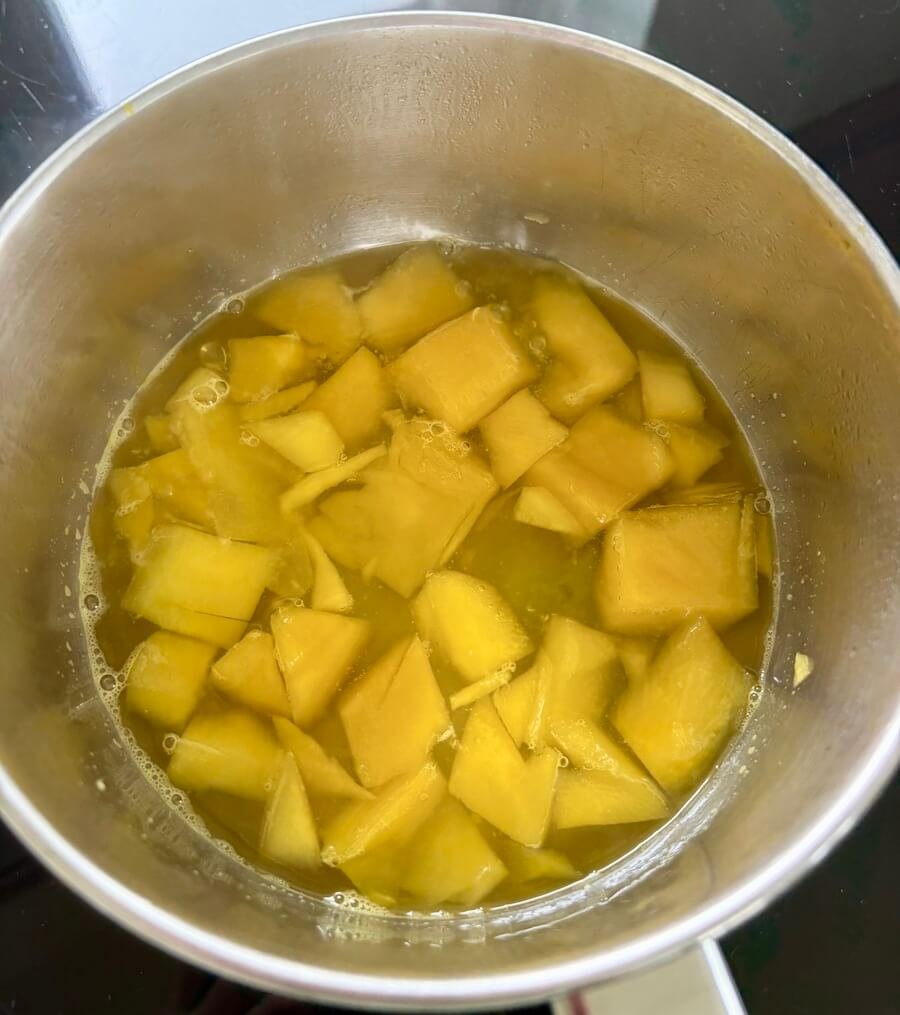
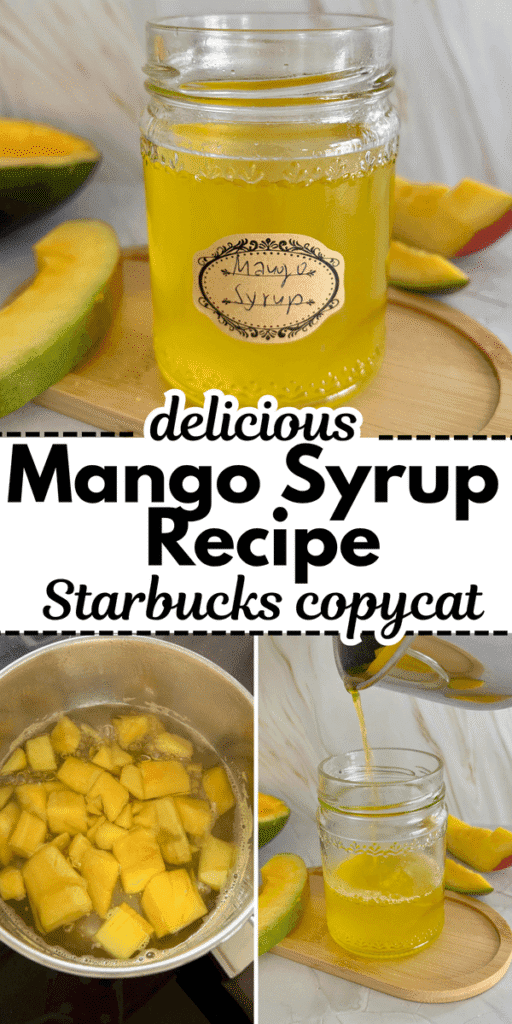
Add your mango chunks to a small saucepan. Then pour in one cup of water and add three-quarters of a cup of sugar.
This ratio gives you that classic Starbucks-style syrup: sweet but still very much mango-forward.
If your mango is super sweet, you can slightly reduce the sugar, but I wouldn’t go too low, or it won’t have that same syrup texture.
Stir everything together before turning on the heat so the sugar starts dissolving evenly.
Simmer Until the Mango Softens
Place the saucepan over medium heat and bring the mixture to a gentle simmer. You don’t want a rapid boil here, just steady heat.
Let it simmer for about 10 to 12 minutes. During this time, the mango will soften and start breaking down into the liquid.
Stir occasionally so nothing sticks to the bottom. You’ll notice the color deepen slightly and the mixture start to smell really fruity. That’s when you know it’s working.
Strain the Syrup
Once the mango is very soft and the syrup smells strong and fruity, remove it from the heat.
Pour the mixture through a fine mesh strainer into a bowl or jar.
Pro tip: Use the back of a spoon to press the mango pieces and extract as much syrup as possible. This step is what gives you a smooth, clean syrup without any pulp.
Discard the leftover solids.
Let it Cool Completely
Allow the syrup to cool at room temperature before storing it.
As it cools, it will thicken slightly, which is exactly what you want.
If it seems a little thin while hot, don’t worry, it will come together once it sits.
Store it Properly
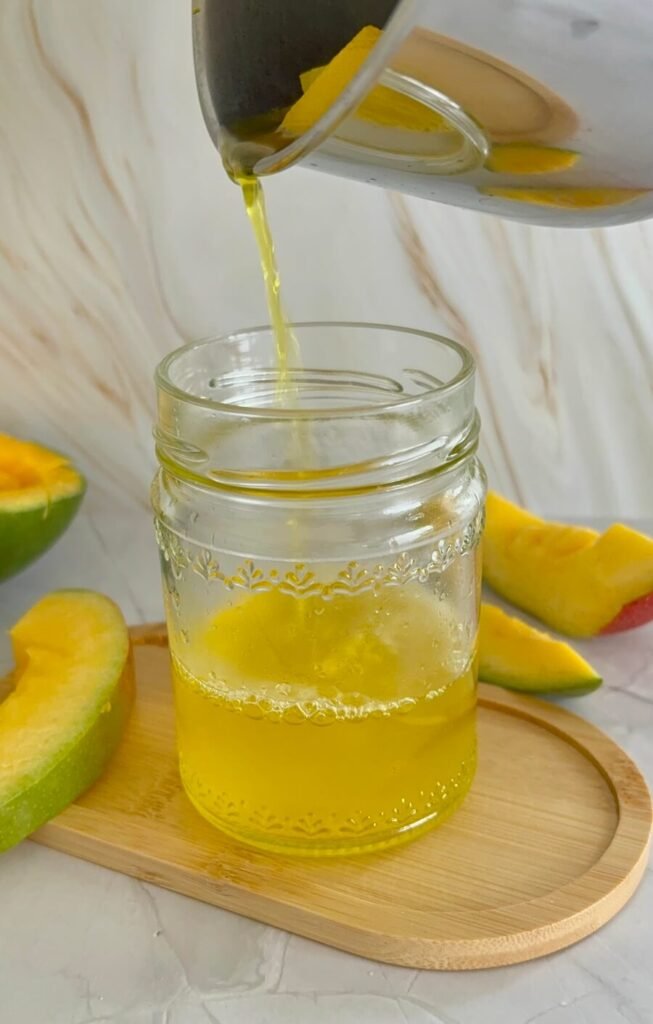
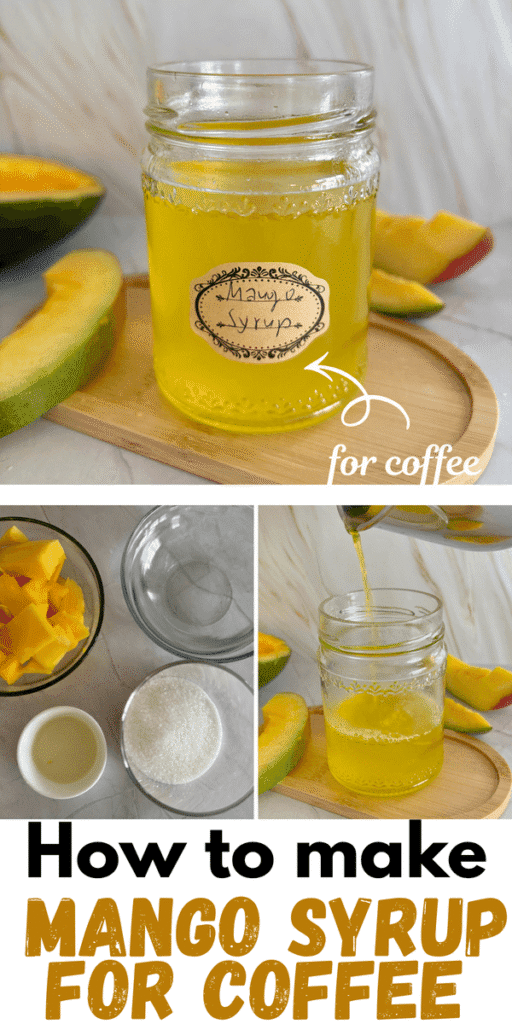
Transfer the cooled syrup into a glass jar or bottle with a lid.
Store it in the fridge, where it will keep well for about 7 to 10 days.
Since this is made with real fruit, it doesn’t last as long as store-bought syrups, but the flavor is so much better.
I usually make a fresh batch once a week if I’m using it regularly.
How to Use This Mango Syrup
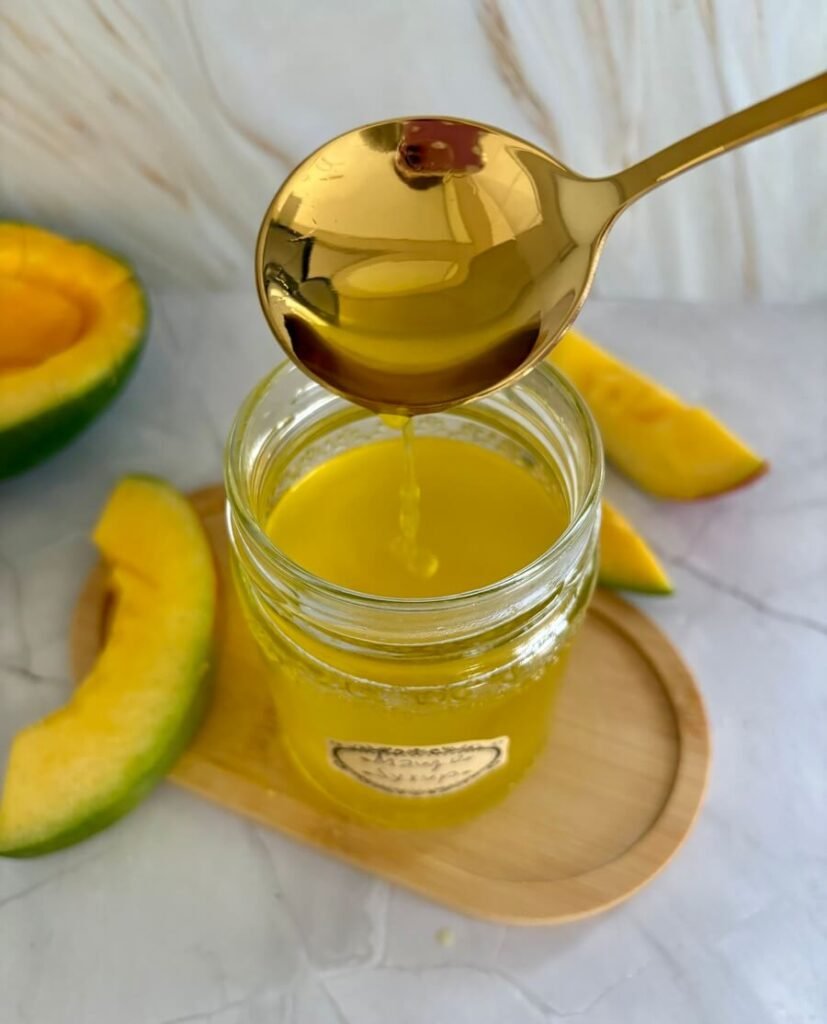
This is where it gets really fun. This syrup is the base for so many drinks, especially if you’re recreating Starbucks-style recipes at home.
You can mix it into iced matcha for an iced mango cream matcha, stir it into chai for an iced mango cream chai, or use it in coffee with mango cream cold foam on top.
It also works really well in:
- Iced lattes
- Lemonade
- Sparkling water
- Even drizzled over desserts
If you’re making mango cream cold foam, this syrup is exactly what gives it that signature flavor.
It blends smoothly into cream without separating, which is something not all fruit syrups can do.
Tips for the Best Results
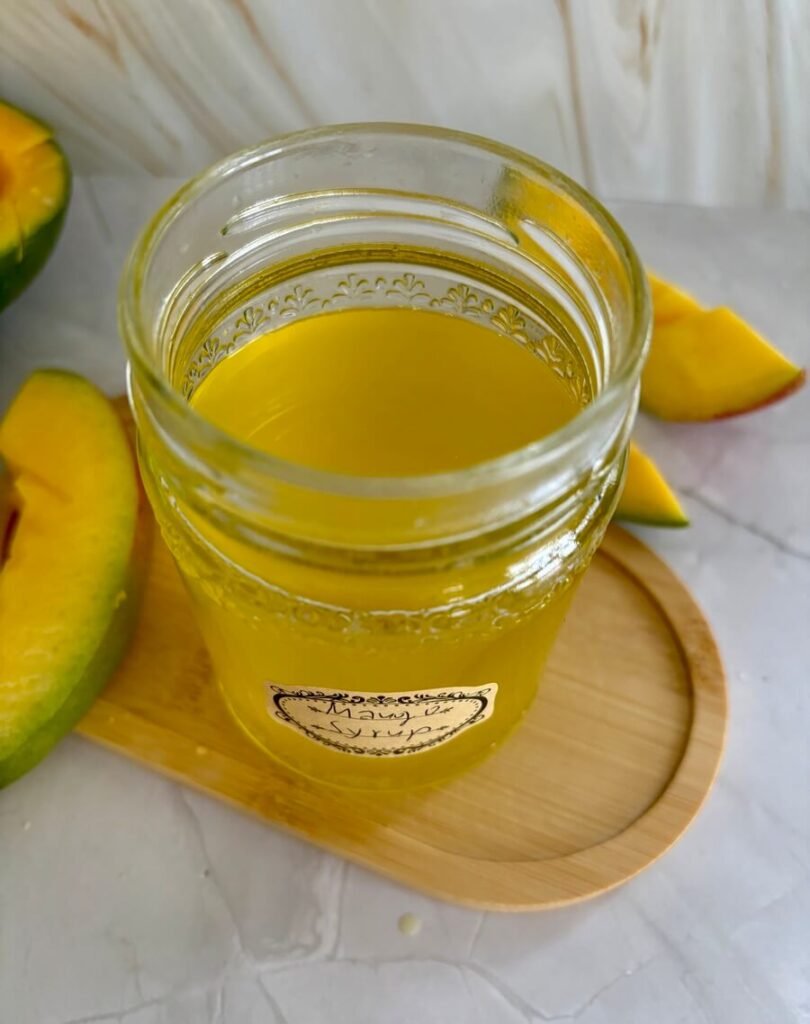
One thing I learned quickly is that cooking time matters. If you rush it and don’t let the mango soften fully, the syrup won’t blend as smoothly.
Also, don’t skip straining if you’re using it for cold foam. That smooth texture makes a big difference when you’re trying to get that café-style finish.
If your syrup ends up too thick, just stir in a tablespoon of water at a time until it reaches the consistency you like.
Mango Syrup Variations
If you want to tweak the flavor slightly, there are a few easy adjustments you can make.
A small squeeze of lemon juice can brighten the flavor and balance the sweetness. This works especially well if your mango is very ripe.
You can also add a tiny pinch of salt to bring out the mango flavor more. It doesn’t make the syrup salty, it just makes everything taste a bit more intense.
For a slightly deeper flavor, try replacing part of the sugar with honey. It changes the taste just enough without overpowering the mango.
Check out more coffee syrup recipes:
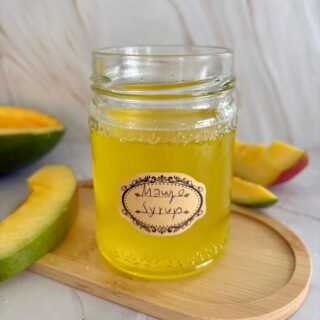
Mango Syrup (Starbucks Copycat)
Ingredients
- 1 cup mango chunks fresh or thawed frozen
- 1 cup water
- ¾ cup sugar
Instructions
- Peel and cut the mango into small chunks.
- Add mango, water, and sugar to a saucepan.
- Heat over medium until it reaches a gentle simmer.
- Simmer for 10–12 minutes, stirring occasionally. Press the mango as it softens.
- Remove from heat and strain through a fine mesh strainer for a smoother texture.
- Press solids to extract all the syrup.
- Let cool completely.
- Transfer to a jar and store in the fridge.
Notes
- Use ripe mango for the best flavor.
- Straining gives a smoother syrup, especially important for cold foam.
- Store in the fridge for up to 10 days.
- Adjust sugar slightly depending on mango sweetness.
- Add a squeeze of lemon juice if you want a brighter flavor.
- You’ll get about 1 to 1¼ cups of mango syrup after straining. That translates to roughly 16-20 servings. If you like a stronger mango flavor and use 2 tablespoons per drink, then it’s more like 8–10 servings.


Marina is the writer behind CozyCornerCharm. She grew up on Turkish coffee, later discovering specialty brewing through her first V60, which inspired her ongoing coffee journey. She has written for Craft Coffee Spot, Home Grounds, and Barista HQ and now shares her experience here on her own coffee corner.
Leave a Reply